
Speaker:Dr Jia-Lin Kang
Time: Sunday, July 20, 15:00 p.m
Venue: Conference Room 1 of the Convention Center
Abstract:
Molecular design is crucial for developing chemical products and materials, yet traditional trial-and-error methods are costly and time-consuming. This study proposes an AI-assisted framework using a fine-tuned GPT-2 model to generate molecular structures based on thermodynamic property constraints, focusing on solubility via the DELTA parameter. Trained on 14,318 entries from the Aspen property database and fine-tuned using only 3% of data with known DELTA values, the model learns structure–property relationships from SMILES-descriptor pairs.
An iterative generation-screening process filters and evaluates candidates for validity, diversity, and property alignment. The model effectively generates valid molecules matching in-range targets (e.g., DELTA = 23100) within 1–2 iterations and shows reasonable convergence for extrapolated values (e.g., DELTA = 13100).
This approach demonstrates the promise of large language models in accelerating data-efficient, property-driven molecular design.
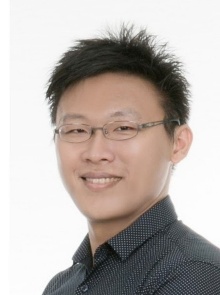 Biography:
Prof. Jia-Lin Kang is an Associate Professor in the Department of Chemical Engineering at National Chung Cheng University, Taiwan. His research centers on the integration of artificial intelligence (AI) with chemical engineering, with particular focus on smart manufacturing, digital twins, computational fluid dynamics (CFD) simulation, and intelligent process control. He earned his Ph.D. in Chemical Engineering from National Tsing Hua University and completed a visiting research appointment at the University of Texas at Austin, where he worked on advanced process modeling. Professor Kang has authored more than 40 peer-reviewed articles in leading international journals such as Computers & Chemical Engineering, Applied Soft Computing, and Chemical Engineering Research and Design. He is also a recipient of the Young Scholar Fellowship – Einstein Program in recognition of his contributions to smart process system research. Professor Kang has extensive experience leading academia-industry collaborative projects, partnering with major Taiwanese companies including Formosa Plastics Group, Formosa Chemicals & Fibre Corporation, Nan Ya Plastics, CTCI Corporation, China Steel Corporation, and CPC Corporation, as well as with premier research institutes such as the Industrial Technology Research Institute (ITRI) and the Institute of Nuclear Energy Research (INER).His projects encompass AI-driven heat exchanger design, fault diagnosis systems for petrochemical processes, AI-based model predictive control (AI-MPC) for chemical plants, and dynamic modeling of polymer production systems. These initiatives contribute to Taiwan’s industrial digital transformation and exemplify the practical application of AI in the chemical engineering field.With a strong commitment to bridging academic research and industrial practice, Professor Kang continues to advance AI adoption across Taiwan’s chemical and energy sectors, promoting sustainable, data-driven innovation in process industries.