
Speaker: Dr Xingxing Zhang
Time: Wednesday, July 30, 9:00 a.m
Venue: Conference Room 1 of the Convention Center
Abstract:
This seminar explores the significance of Positive Energy Districts (PEDs) in transforming urban energy systems toward climate neutrality. A PED is defined as an urban neighborhood that not only achieves net-zero greenhouse gas emissions but also produces more renewable energy than it consumes annually. These districts integrate buildings, mobility, ICT, and users into a cohesive energy ecosystem, enhancing sustainability, energy flexibility, and local resilience. The seminar outlines the evolution of PED frameworks (1.0 to 3.0), their definition under international initiatives like the European SET Plan and IEA Annex 83, and emphasizes the role of energy communities as the social backbone of PEDs. Sweden's active participation in PED research and implementation is showcased through national programs (e.g., Viable Cities) and European projects such as PED-ACT, SET-PED, TRANS-PED, CITIES4PEDS, and INTERACT. The case studies from Sweden include urban developments in Lund (Brunnshög, Linero, Medicon Village) and Sunnansjö (Ludvika). These projects highlight diverse strategies like low-temperature district heating, retrofitting for energy efficiency, solar PV systems, energy sharing microgrids, and smart urban furniture designed with circular economy principles. The seminar concludes by addressing key challenges and open questions, such as defining district heating’s role in PEDs, assessing life-cycle impacts, and the need for national certification standards. It positions PEDs not merely as end-goals, but as dynamic pathways for planning and replicating sustainable urban transitions.
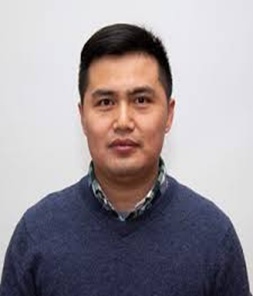 Biography:
Xingxing Zhang is working as a full Professor in energy technology at Dalarna University, Sweden. He is the head of subject in energy technology, and the director of doctoral programme - Energy Systems in the Built Environment. He leads the Urban Information Modeling (CIM) research group and serves as a Visiting Professor at Osnabrück University of Applied Sciences in Germany, as well as a Distinguished Scientist for the “SCALE CITIES” program of the European Commission for Science and Technology. He received his Ph.D. from the University of Hull, UK, in February 2014, where he continued his postdoctoral research. In January 2015, he joined the University of Nottingham Ningbo China as a lecturer. In February 2017, he moved to Dalarna University in Sweden as a senior lecturer and was promoted to Associate Professor (Docent/Reader) in November 2018 and to Full Professor in November 2022. He has multidisciplinary research in buildings, urban energy systems, and data analytics. He is active in EU research networks, by working in national projects, Nordic energy research projects, JPI Urban Europe and DUT projects, H2020 projects, EU cost action and IEA tasks. He is the EU expert of ‘Scalable Cities’ programme about digitalization of urban energy system and application of AI on smart cities. He ranks as one of the top 2% scientists since 2021. He has published 4 books, 10 chapters and over 180 peer-reviewed papers as well as 10 patents. He serves as subject editor of ‘Building Simulation’ and editorial board member of several journals.