
Recently, the research group led by Professor Kunfeng Wang from Beijing University of Chemical Technology (BUCT) has published a paper titled 4DWeaver: Bridging Reconstruction and Generation via Compact Autoregressive Priors in IEEE Transactions on Pattern Analysis and Machine Intelligence (IEEE TPAMI), a top tier journal in artificial intelligence. The first author of the paper is Ruosen Hao, a master’s student from the School of Information Science and Technology. Corresponding authors are Professor Kunfeng Wang and Associate Professor Tianyu Shen of the same school. Beijing University of Chemical Technology is the sole affiliation of this work. The research was supported by the National Natural Science Foundation of China and the Beijing Natural Science Foundation.
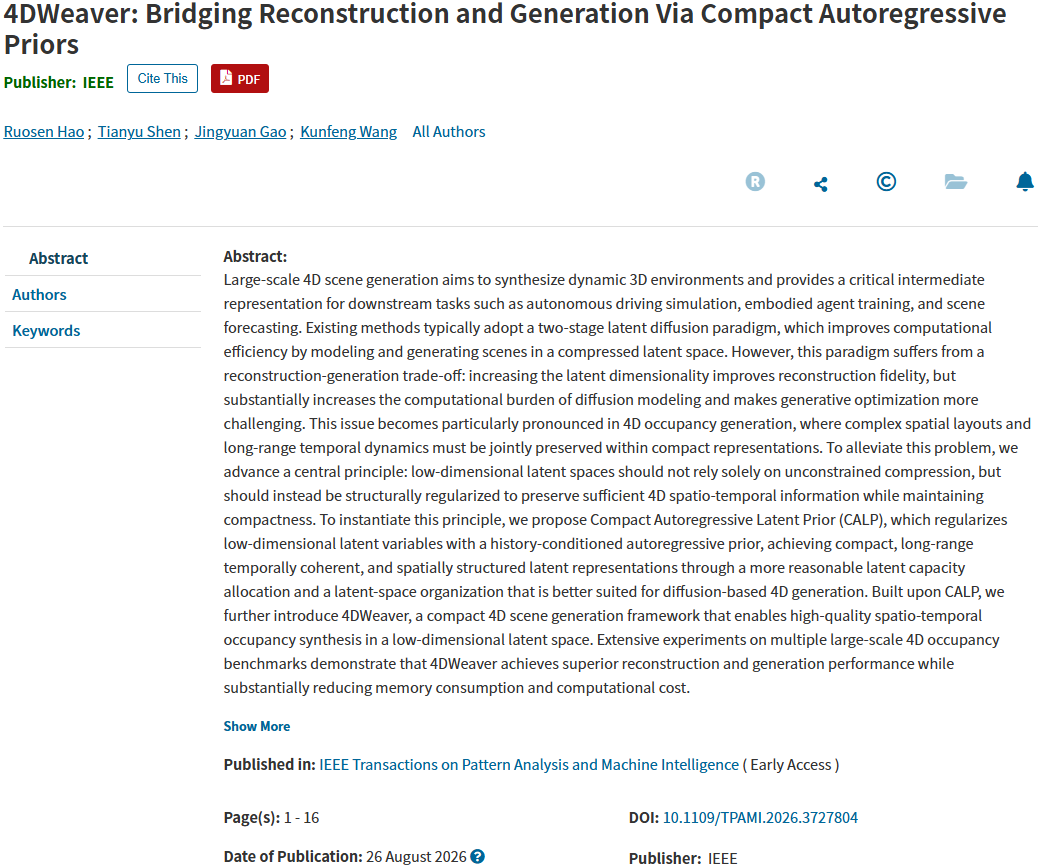
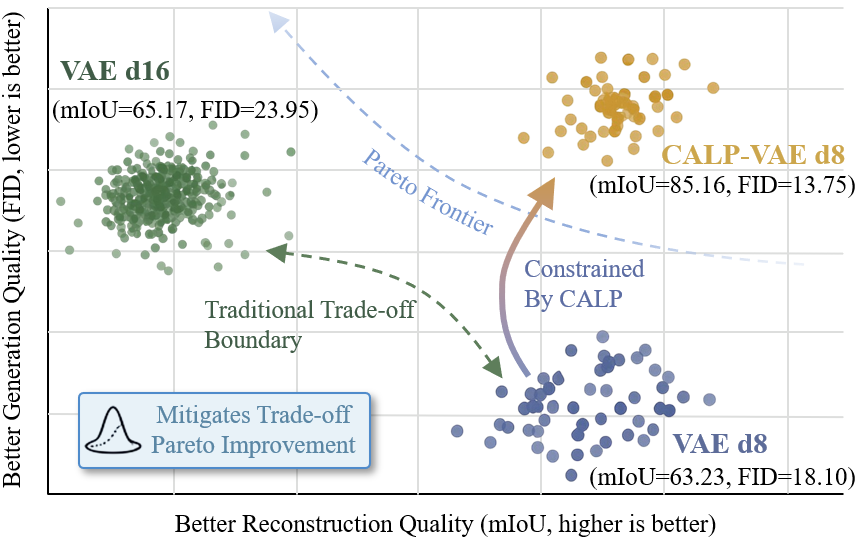
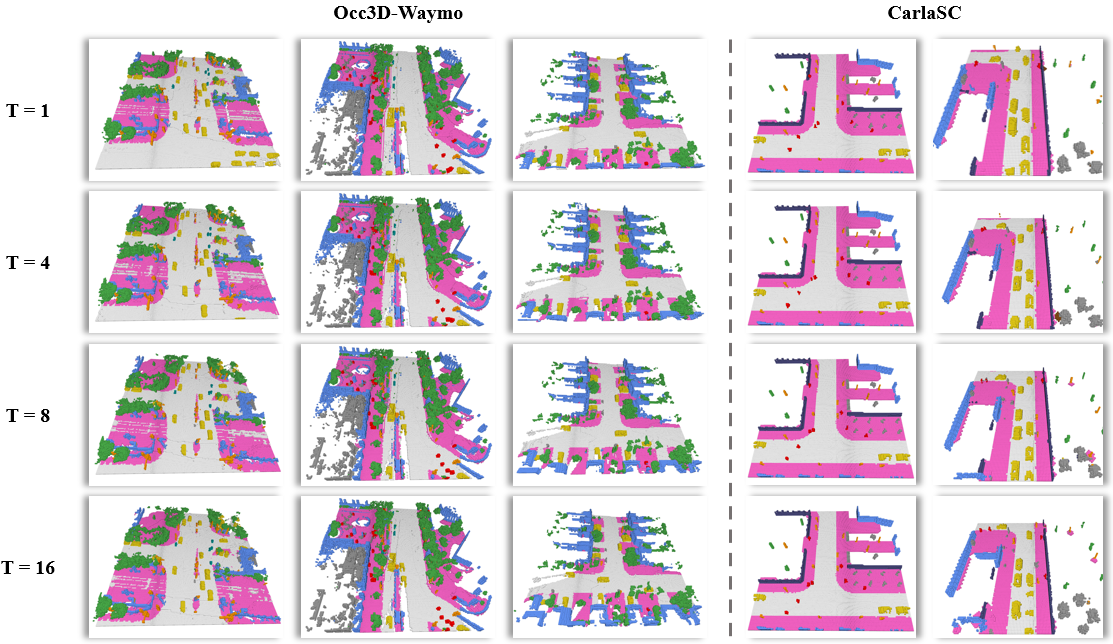
Autonomous driving stands as one of the most representative comprehensive frontier directions in artificial intelligence, and is regarded as a critical technical benchmark for evaluating the perception, cognition and decision making capabilities of AI systems. High quality dynamic driving scene generation can provide abundant, realistic and controllable scene support for autonomous driving system training, complex environment understanding as well as decision making and planning. To address the drawbacks of existing dynamic scene generation methods, including heavy computational overhead, loss of spatio structural information, and the inherent trade off between high fidelity reconstruction and efficient generation, the research team proposes 4DWeaver, a 3D dynamic scene generation framework built upon Compact Autoregressive Latent Prior (CALP). This method innovatively constructs a compact latent space constrained by spatio temporal structures, and models the distribution of latent variables using the evolutionary patterns of historical scenes. It drastically compresses scene representations and cuts computational costs, while effectively boosting both generation and reconstruction performance for dynamic scenes. On this basis, an efficient latent space diffusion generation model is further devised to realize high quality synthesis of complex 3D dynamic scenes. This work offers a new technical pathway for constructing large scale autonomous driving scenes with high fidelity and low cost, and is expected to advance related technologies including autonomous driving system training, environment understanding, decision making planning and world models.
IEEE Transactions on Pattern Analysis and Machine Intelligence (IEEE TPAMI) is the flagship journal of the IEEE Computer Society. It is categorized as a Class A international academic journal recommended by the China Computer Federation (CCF) and a T1 level high quality journal in computer science. It consistently publishes cutting edge research on computer vision, pattern recognition, machine learning and artificial intelligence, ranking among the most influential academic journals in these fields worldwide.
The publication of this outcome demonstrates the team’s solid research foundation and innovative capacity in frontier explorations covering autonomous driving world models, scene generation and spatio temporal modeling. Moving forward, targeting complex real world driving environments, the team will keep advancing key technologies such as high fidelity scene representation, dynamic world evolution modeling and multimodal generation. It will explore more efficient, realistic and physically consistent world models for autonomous driving, and promote the deployment of relevant outcomes in scenarios such as autonomous driving system training, environment understanding, decision making planning and closed loop simulation testing. The work aims to deliver technical support for the development of next generation autonomous driving and embodied intelligence systems.
Link to the original paper: [https://ieeexplore.ieee.org/document/11667217](https://ieeexplore.ieee.org/document/11667217)